
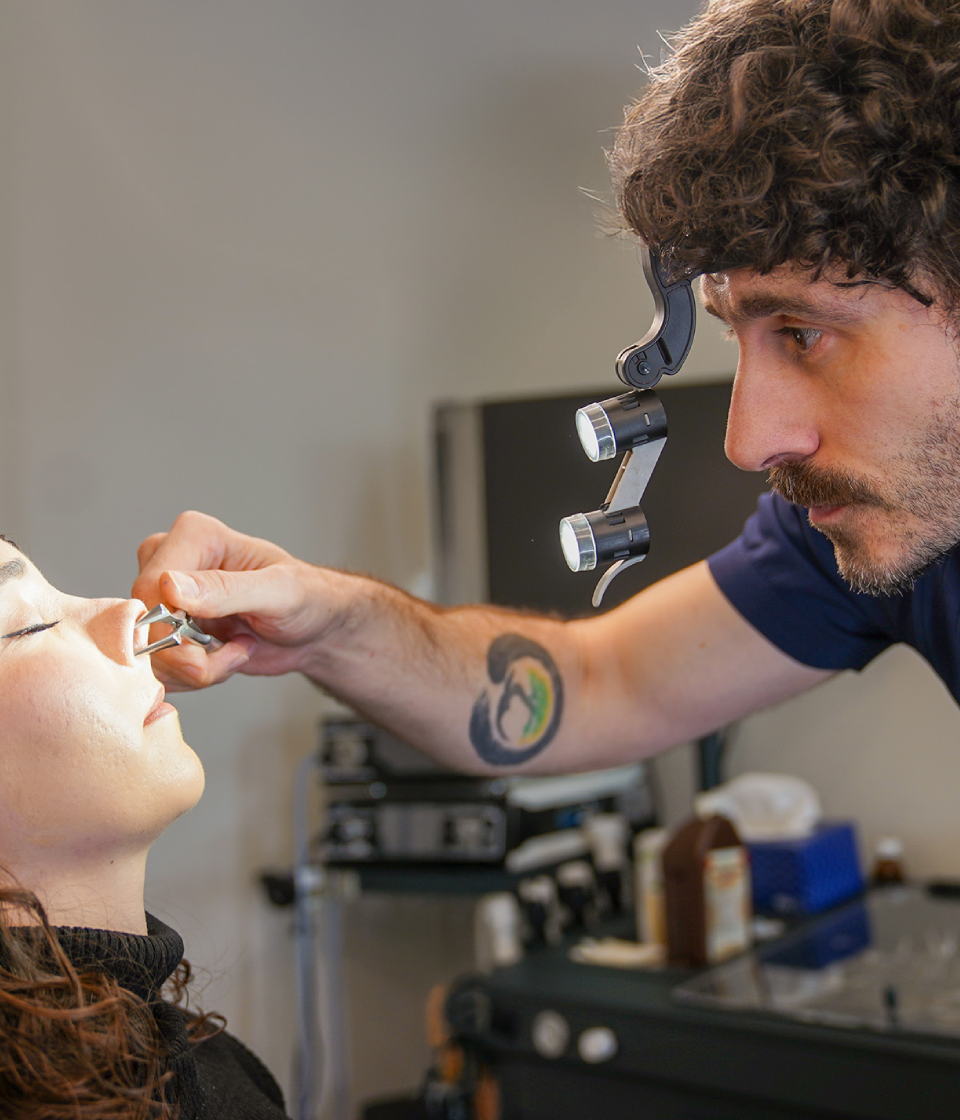
One of the most common questions before rhinoplasty is whether ultrasonic piezo rhinoplasty is better than the traditional technique. There is no single technique that is best for every nose. The right approach depends on the bony framework, cartilage work required, skin thickness, breathing problems, the extent of osteotomies and the surgical plan.
What is piezo rhinoplasty?
Piezo rhinoplasty uses ultrasonic microvibrations to shape and cut nasal bone. It is mainly a bone-working technology and can allow precise osteotomies and contouring. It should not be viewed as a device that automatically protects every soft tissue or guarantees a better result.
What is traditional rhinoplasty?
Traditional rhinoplasty reshapes bone with instruments such as osteotomes and rasps. In experienced hands these methods can also be highly controlled and produce natural, stable results. The presence or absence of a piezo device does not by itself determine surgical quality.
Is there a difference in swelling and bruising?
Systematic reviews of randomized studies suggest that piezoelectric osteotomy can reduce early postoperative edema, bruising and pain in some patients, particularly during the first week. Recovery still varies widely. Skin thickness, surgical extent, revision status and individual healing response remain important.
Does piezo produce a better final result?
Its clearest potential benefit is precision during bony work and reduced early soft-tissue trauma. Final facial harmony, symmetry, tip support and breathing function depend much more broadly on diagnosis, planning, cartilage support, technique and healing. Piezo is a tool, not a guarantee.
Who may benefit most from piezo?
- Patients with a prominent bony hump
- Noses requiring narrowing of the nasal bones
- Selected asymmetric bony frameworks
- Cases requiring precise bone contouring
If the concern is isolated to cartilage or the nasal tip, the added value of piezo may be limited because its primary role is bone modification.
Which technique is right for me?
The decision should not be made from photographs alone. Examination should assess bone width, septum, nasal valves, skin thickness, tip support and your goals. In some operations, piezo and conventional instruments are used together as complementary tools.
FAQ: Is piezo recovery faster?
Early bruising and swelling may be lower, but final refinement still takes months. Subtle swelling can take about a year to resolve, and sometimes longer in thick-skinned or revision cases.
In summary: the best method is the one selected for your anatomy, not simply the newest device. This article is for general information and does not replace an in-person medical assessment.