
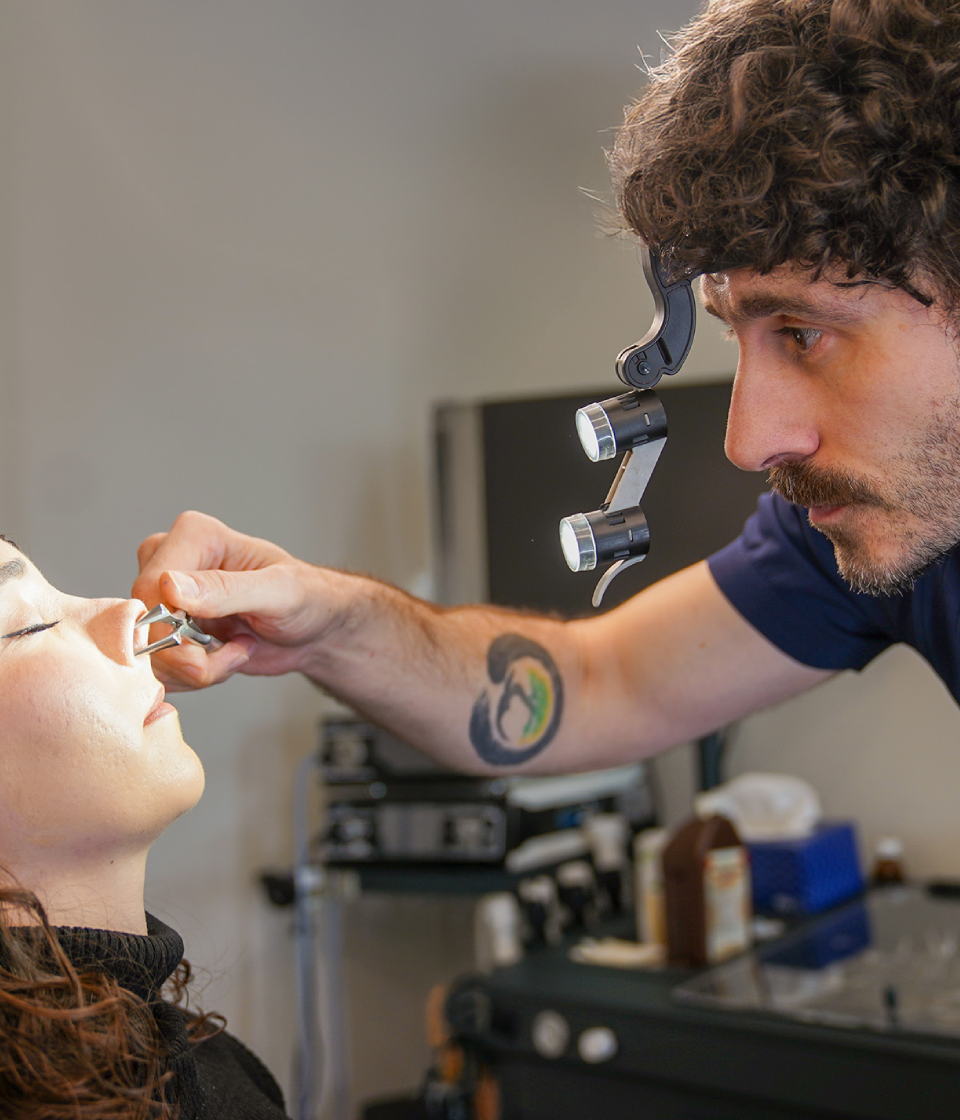
The first week after rhinoplasty is often less painful than patients expect, but it can feel more uncomfortable than expected. Congestion, mouth breathing, disrupted sleep, facial swelling and living with a splint are often more bothersome than pain itself. The following is a general guide; your surgeon's instructions always come first.
Day 1: pressure and blockage more than pain
Internal splints and swelling can make nasal breathing difficult. Dry mouth and throat irritation are common. A small amount of blood-stained watery drainage on the gauze beneath the nose can be expected during the early days. Keeping the head elevated is commonly recommended.
Day 2: swelling and bruising may increase
Periorbital swelling often becomes more noticeable on days two and three. Looking more swollen than on the first day does not mean that something went wrong. Take medication only as prescribed and do not add blood-thinning medicines or supplements without medical advice.
Day 3: sleep and dry mouth can be the annoying part
Sleeping on your back with your head elevated may feel unfamiliar. Mouth breathing can dry the lips and throat. Fluids, balanced soft foods and avoiding constipation can improve comfort. Do not blow or forcefully clean the nose.
Day 4: swelling often starts to feel more manageable
For many patients, facial swelling begins to settle. Tip numbness, stiffness and congestion can continue. Gentle indoor walking is often encouraged if your surgical team has not advised otherwise.
Day 5: your energy returns before your nose is ready
Feeling better does not mean you are ready for workouts or heavy housework. Bending, lifting and activities that sharply raise the heart rate can increase bleeding and swelling. Follow your own surgeon's advice about showers, glasses and skin care.
Day 6: the urge to remove the splint grows
Tape may itch and you may want to clean everything. Do not remove the external or internal splints yourself. Crusts should be managed only with the care method recommended by your team.
Day 7: splint removal can be surprising
The external splint and some sutures are commonly removed around the first-week visit. Do not expect a tiny, refined final nose immediately. Tape marks, swelling, temporary asymmetry and an upturned-looking tip are common early findings.
Small but realistic details patients mention
- Dry mouth can be more annoying than pain.
- Smell and taste may temporarily feel reduced.
- Smiling and moving the upper lip can feel strange.
- The skin under the splint may itch.
- Checking the mirror too often can create unnecessary anxiety because swelling changes daily.
What is not considered routine?
Uncontrolled nosebleeds, worsening severe pain, fever, yellow or foul discharge, major breathing difficulty, rapidly increasing one-sided swelling or persistent vomiting should be discussed with your surgical team.
The main rule for week one: protect the nose, follow the care plan and do not judge the final result too early. This article is general information.