
Many people seeking cosmetic rhinoplasty also have a deviated septum, nasal valve narrowing or chronic nasal blockage. In appropriate patients, functional and aesthetic concerns can be addressed during the same operation. This combined approach is commonly called septorhinoplasty.
What is the difference between septoplasty and rhinoplasty?
Septoplasty focuses on straightening the internal septum that separates the two nasal passages. Rhinoplasty reshapes the external nose and, when necessary, its supporting framework. Septorhinoplasty combines these goals in one surgical plan.
Is a deviated septum the only cause of nasal obstruction?
No. Obstruction can also be caused by enlarged turbinates, internal or external nasal valve narrowing, allergic rhinitis, mucosal swelling and other conditions. Treatment should therefore be based on a functional examination, not appearance alone.
What is the advantage of combining function and aesthetics?
Both appearance and airway can be planned within one anesthetic and one recovery period. Structural support can be protected while the bridge or tip is reshaped. In selected cases, septal cartilage can also be used as graft material for reconstruction and support.
Can rhinoplasty make breathing worse?
It can if the nose is narrowed excessively or important support structures are weakened. That is why nasal valves, septum and tip support should be assessed before surgery. Functional planning is part of safe aesthetic rhinoplasty.
Who may be a candidate for septorhinoplasty?
- Patients with septal deviation and cosmetic concerns
- Post-traumatic deformity with breathing difficulty
- Nasal valve narrowing plus external nasal imbalance
- Selected revision patients with both form and function problems
What happens during assessment?
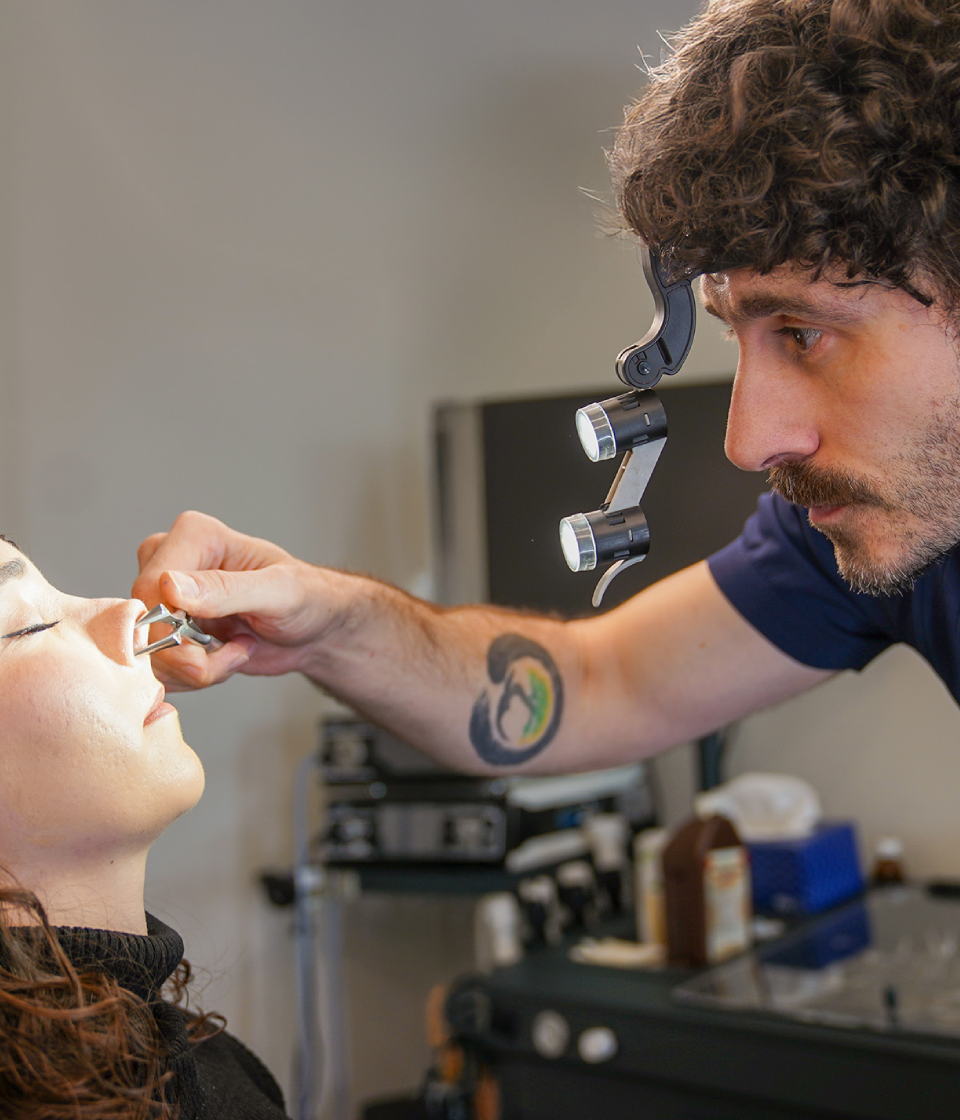
The surgeon examines the inside of the nose, septum and nasal valves. Nasal endoscopy may be used when needed. Allergy or chronic mucosal disease may require additional evaluation, and not every blocked nose is best treated with surgery.
What is recovery like?
Congestion and swelling are expected early on. Internal splints can temporarily make nasal breathing more difficult. Functional improvement usually develops gradually as swelling settles, while the cosmetic result continues to refine for many months.
In summary: the goal is a nose that looks balanced and works well. Individual examination is required to determine whether combined surgery is appropriate.